ELIZA
— EPISODE 1: “Fire and Silence”
Screenplay: Faramarz Norouzi
Based on the novel by: Kambiz Dastory
Format: Premium Miniseries — Episode 1 of 8
VISUAL STYLE: Warm, sepia tones for flashbacks; colder, chaotic lighting in revolutionary scenes.
MUSICAL LEITMOTIF: Chopin’s Nocturne in C-sharp minor, Op. posth. (“Requiem Nocturne”) recurs in memory, trauma, and revelation.
CHARACTERS
🧑🎬 MAIN CHARACTERS
YOSEF AMIRI – 20 (1979) / mid-40s (2004)
A quiet, skilled piano craftsman haunted by guilt. During the revolution he saves a child from a burning brothel in Qala but fails to rescue the mother. In 2004 he lives under the weight of that secret, trying to protect the daughter he raised as his own.
ELIZA AMIRI – 2 (1979) / 27 (2004)
The child Yosef rescued—born to a Polish pianist, raised in Tehran as his daughter. Now a musicologist studying foreign influence in Persian music, she unknowingly begins to uncover the truth about her origins and her father’s silence.
HAMED – 10 (1970) / 20 (1979)
Yosef’s childhood friend. Loyal and idealistic, later drawn into the revolutionary underground. He leads a rescue group during the Qala attack, trying to save civilians from the mob. His moral idealism contrasts with Yosef’s caution.
HADI MIRZAI – 30s (1979)
Charismatic and fanatical. A revolutionary commander whose zeal turns to cruelty. Leads the purge faction that burns Qala. Once close to Hamed and Yosef, now a dark mirror of both. Later rises to power in the Revolutionary Guard.
THE EUROPEAN WOMAN – early 30s (1979)
A Polish pianist living in Tehran’s Qala district. Plays Chopin as the fire consumes her home. Speaks broken Farsi and Polish. Hands her child and a silver pendant to Yosef before dying in the blaze.
SUPPORTING CHARACTERS
BEHZAD – late 20s (2004)
Archivist and Eliza’s research partner. Sharp, loyal, and analytical. Helps trace the “FAM-213” order and the Rahimi records—becoming her closest ally in uncovering the past.
COLONEL RAHIMI – 70s (2004)
A retired officer who left behind a final video confession admitting his role in the 1979 massacre. His guilt reflects Yosef’s unspoken torment.
ARCHIVIST – 50s (2004)
A weary civil servant who warns Eliza that her file requests are being monitored. Represents institutional fear and the limits of truth in a controlled state.
CLERK (DAFTAR-E AHVAL) – late 20s (1979)
A young registrar who quietly alters Eliza’s birth record, listing her mother as “Housewife (Deceased).” His small act of compliance makes Yosef’s lie official history.
BABA (MORTEZA AMIRI) – 30–45 (1964–1970 flashbacks)
Yosef’s father. A carpenter scarred by fear of SAVAK and by his brother’s arrest. Destroys Yosef’s guitar in a fit of panic, silencing the boy’s music and planting the seed of generational shame.
NEMAT – 50–60 (1970)
Owner of the teahouse where young Yosef and Hamed first meet. A quiet observer of the coming upheaval, symbolizing the fading calm before the revolution.
YOUNG YOSEF / YOUNG ELIZA – ages 5–10 in flashbacks
Child versions shown in key emotional memories that frame the generational trauma and lost innocence.
ELDERLY WOMAN – 60s (2004)
A scarred survivor of Qala, speaking in Polish-accented Farsi. She haunts Tehran’s streets, murmuring:
MINOR & COLLECTIVE ROLES:
- HASSAN & OMAR – affluent piano buyers from Sharjah and Doha.
- SOLDIERS / CROWD / WOMEN IN QALA – the chaotic masses of 1979.
- SUPERVISOR & OPERATOR – administrative figures in archive and switchboard scenes.
“ELIZA” — Where History and Family Collide
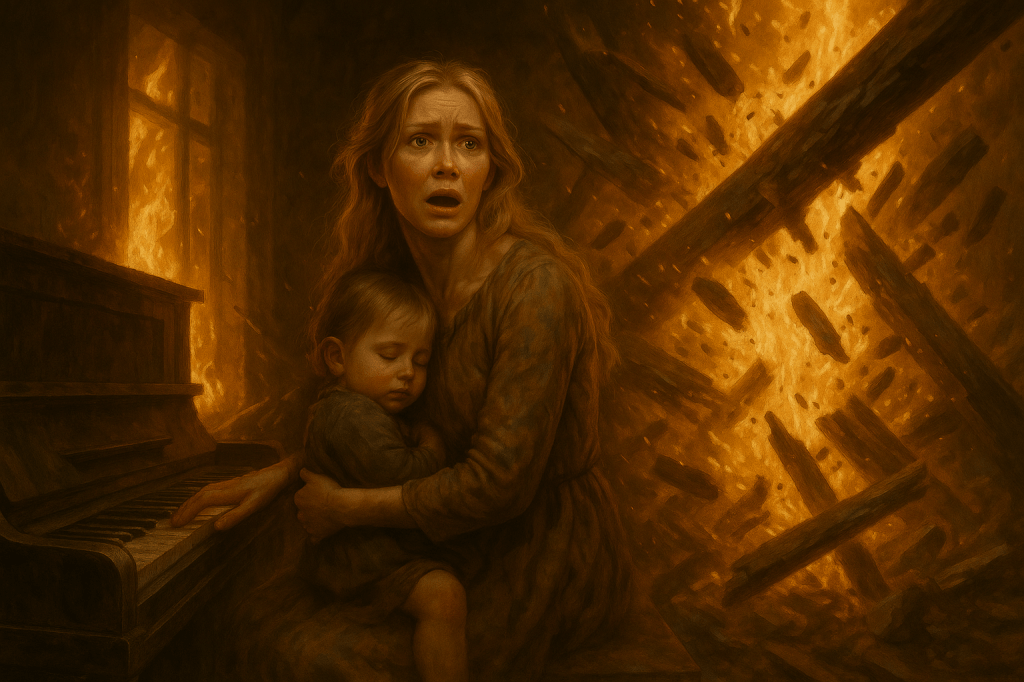
All concept artwork and scene illustrations created and owned by
Dr. Faramarz Norouzi.
© 2025 Dr. Faramarz Norouzi. All rights reserved.
 Eliza
Eliza 