Extended Pitch

Series Overview
On a night of revolution in Tehran, a piano maker rescues a two-year-old girl from a burning brothel. Decades later, a single Chopin melody reawakens buried truths about her origins.
At its core, Eliza is about how personal choices shape generations—how silence can wound as deeply as violence, and how music can carry both trauma and healing across borders.
Themes
- Home & belonging: Home is a place—and a choice
- Love vs. ideology: When ideas demand sacrifice, who pays?
- The echoes of history: The same hatred can find new languages
- The price of truth: Revealing—and living with—the truth
Unique Selling Points
- A cross-cultural mystery at the heart of the story: Why was a young Polish woman in Qala that night?
- An epic father–daughter saga with an intimate emotional core
- Chopin’s Nocturne in C-sharp minor as a haunting motif of memory, trauma, and identity
- Circular dramaturgy where 1979 and the present mirror and collide with each other
- Authentically multilingual (Persian, Polish, English) while remaining fully accessible to a global audience
Format & Language
- Format: 8×60 min (Premium miniseries)
- Primary language: English (≈85–90%)
- Authentic elements: Persian and Polish in family and cultural scenes; code-switching for intimacy and identity
- Subtitles: Only when necessary for clarity
Tone & Audience
Prestige limited drama with high emotional intensity and historical resonance. For audiences who appreciated Chernobyl (political realism), Unorthodox (identity and belonging), and The Pianist (music as survival and memory).
Target Audience: Globally minded viewers ages 25–55 who are drawn to historically rooted dramas, migration and identity stories, and cross-cultural family sagas. Ideal for premium streaming audiences on platforms like Netflix, HBO, or Amazon Prime.
Visual & Musical Palette
- Image: Sepia tones for childhood and memory; cold blue-white for revolution and Warsaw winters. Recurring contrast of snow and blood, warmth and ash.
- Sound: Chopin’s Nocturne No. 20 in C-sharp minor, recurring in fragmented and reimagined forms. At the reunion, Polish–Persian fusion underscores cultural connection. Silence punctuates shock and grief.
- Camera/Lighting: Handheld and raw during violence and trauma; steady, soft focal lengths for family intimacy. Light shifts between shadow and glow, reflecting truth and concealment.

Season Arc (Short)
Across eight episodes, Eliza moves from the intimate rescue of a child during revolution to an intercontinental reckoning three decades later. Each episode raises the stakes—shifting from survival in Tehran, to questions of identity in exile, to a violent confrontation in Warsaw—culminating in reconciliation and fragile peace.
E1 – Fire and Silence
Qala night in Tehran, January 1979. Yosef rescues Eliza from the burning brothel. A secret is born that will shape their lives.
E2 – Asylum
Fatherhood begins under the shadow of revolution. Yosef struggles to protect Eliza while friendships fracture, and loyalties are tested.
E3 – The Polish Lane
In their new home, silence and dreams reveal traces of Eliza’s origins. A woman from the past reawakens Yosef’s buried fears.
E4 – Political Turbulence
The revolution turns inward. Mahtab, torn between duty and love, separates from Yosef. Betrayal and political suspicion fracture the bonds of trust.
E5 – The First Clues
Eliza begins her search for her mother’s identity. Dreams and questions drive her to the Polish Embassy, where the first fragile contact offers both hope and danger.
E6 – Conversations Across Borders
The Polish Embassy confirms Eliza’s origins. Identity takes shape. Pastor Piotr leads her to her mother’s grave.
E7 – The Attack in Warsaw
Father and daughter’s fragile peace shatters in Poland. A brutal racist attack leaves Yosef gravely injured.
E8 – Recovery and Reconciliation
In hospital, Yosef slowly heals. Eliza carries new responsibilities. The trial delivers justice, Mahtab returns, and peace is finally within reach.


Main Characters
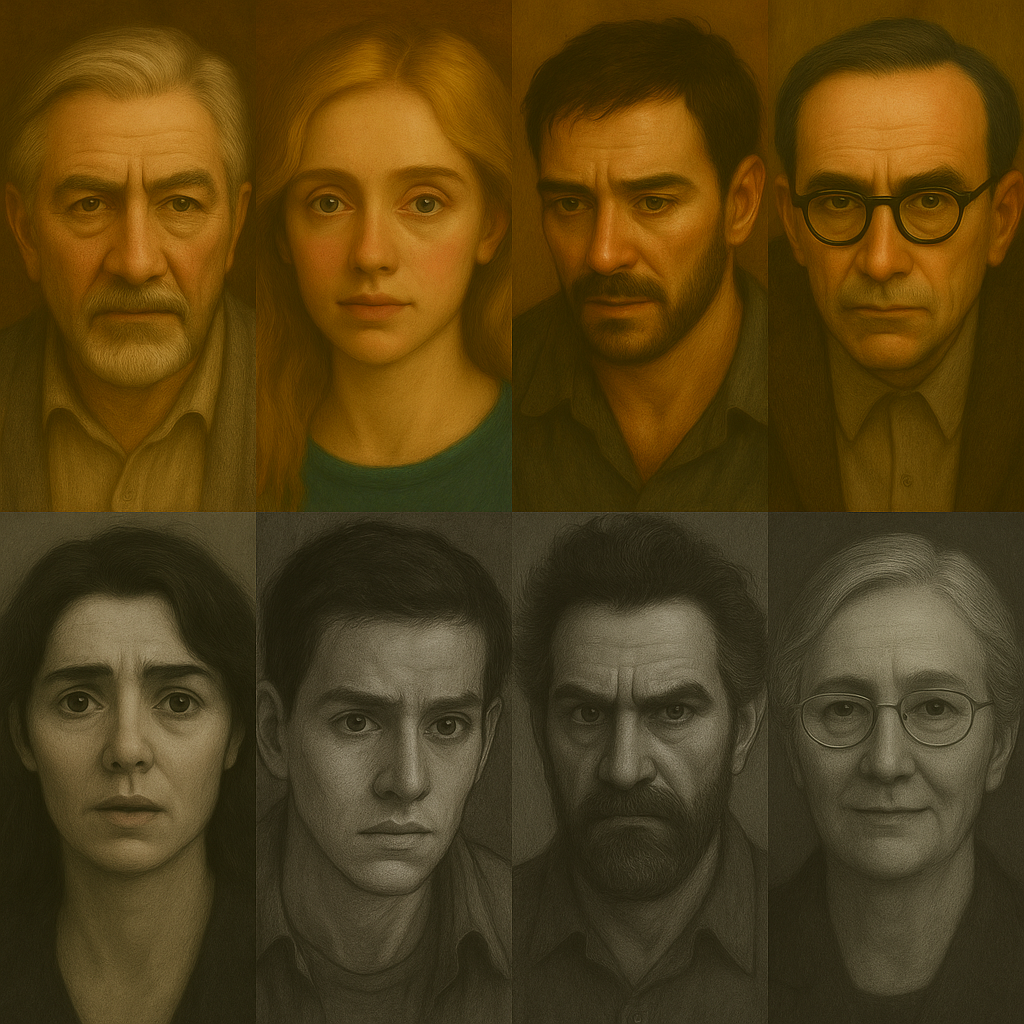
- YOSEF – 40s–50s A quiet but strong man, carrying guilt from the 1979 fire that drives his every choice. His greatest fear is that revealing the truth will destroy Eliza—and their bond. His struggle is the balance between protecting her and setting her free.
- BABA ( YOSEF`S FATHER) – 50s–60s An authoritarian and stern patriarch, shaped by tradition and hard times. He raises Yosef with an iron fist, where obedience and discipline are more important than love. His cold presence marks Yosef’s childhood and becomes a dark shadow over Yosef’s own fatherhood.
- ELIZA – 30s Cultural coordinator with Polish roots, raised in Iran. From seeker to protector, her journey is to find a home without losing her father. Her deepest fear is that discovering her origins will mean betraying the man who raised her.
- HAMED – 40s Yosef’s childhood friend, a passionate revolutionary who sacrifices everything for his ideals. His idealism costs him dearly, and his fear is that his struggle will be forgotten—or meaningless.
- MAHTAB – 30s Nurse and Yosef’s lost love. Intelligent and independent, torn between love and duty. She fears choosing wrongly—losing both Yosef and her place in a changing Iran.
- THE AMBASSADOR – 50s–60s A diplomatic and reserved figure with connections to the Polish embassy. He functions as a gateway between two worlds – east and west – and becomes a catalyst for Eliza’s understanding of her origins.
- THE PASTOR – 40s–50s A man of faith with his own darkness in his past. He provides comfort but also challenges to Yosef and Eliza. The Pastor is both a guide and a mirror of their conscience.
- MASTER SABER – 60s–70s A wise, gray-haired scholar with a background as calligrapher and mystic. His role is to carry the spiritual and historical perspective – a voice that conveys the deeper truths of the times. He functions as a moral compass, but also as a reminder that each generation bears its responsibility.
- KASRA – 30s Employee in Yosef’s workshop. Pianist and soul-searcher. Carries music as a bridge between generations.
- SEYYED – 50s Baker and local leader figure. A man rooted in tradition but with a sense of justice.
- HADI – 20s (later 40s) A young man who attacks Yosef in the beginning but survives and later becomes a leader figure within the Revolutionary Guard. Symbolizes the consequences of hatred’s spiral.
- Jadwiga & Katarzyna (Poland): Relatives who represent genuine acceptance
Creators
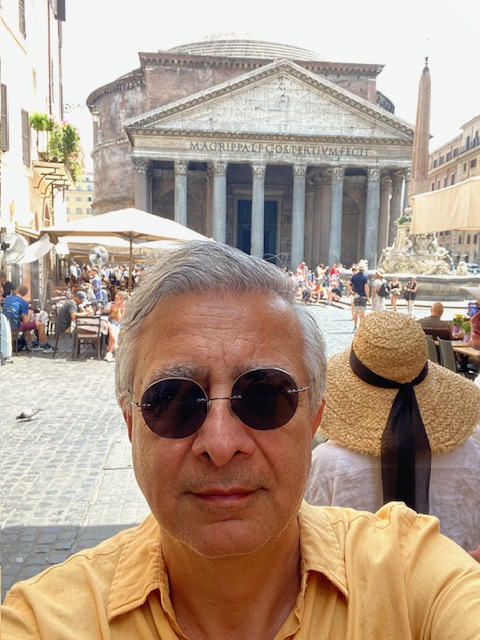
Dr. Faramarz Norouzi – Screenwriter and physician with Persian background based in Stockholm. His expertise in trauma psychology and lived cultural insight bring rare authenticity and emotional depth to the series.
Kambiz Dastory – Author of the original novel Eliza, born in Iran and based in Gothenburg. His acclaimed storytelling provides the literary foundation for the adaptation.
Screenplay by Dr. Faramarz Norouzi
Based on the novel by Kambiz Dastory
All concept artwork and scene illustrations created and owned by
Dr. Faramarz Norouzi.
© 2025 Dr. Faramarz Norouzi. All rights reserved.
Registered with Writers Guild of America West ( WGAW )
Reg. No. 2314905
Valid until September 14, 2030
 Eliza
Eliza 